
Engine Test Stand Automation for Operation with Alternative Fuels -
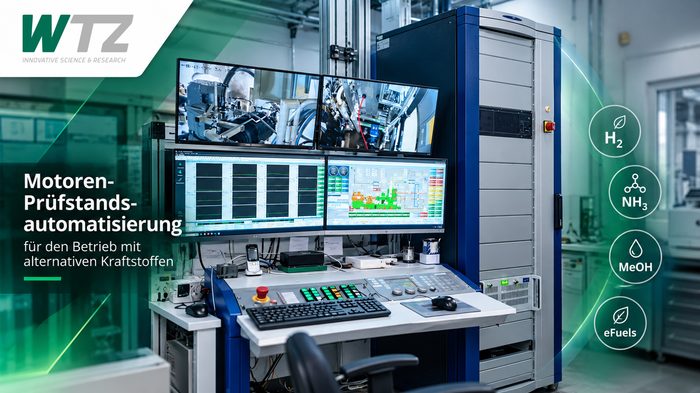
As part of the project, Engine Test Stand 7 at the WTZ Roßlau was equipped with a modern
Equipped with the PUMA-2 test bench automation system . The new infrastructure enables more efficient testing of combustion processes using alternative fuels such as hydrogen, methanol, and ammonia, and strengthens the WTZ’s research and development capabilities.
Project Objectives
The goal of the project was to modernize the automation infrastructure of Engine Test Stand 7 for operation with alternative fuels.
To this end, a new PUMA-2 test stand automation system from AVL Deutschland GmbH was procured and commissioned. Existing measurement and automation systems, as well as the indexing technology, were integrated into the new environment.
Project Status and Commissioning
The test bench has been in regular operation since January 2026. The modernized infrastructure provides the foundation for further research into innovative combustion processes and alternative fuels.
Technological Advantages and Potential
For WTZ, as an application-oriented research and development company, a high-performance test bed infrastructure is essential for investigating combustion processes for hydrogen, methanol, ammonia, and other alternative fuels.
The modular system architecture allows for faster integration of new sensors and measurement systems.
The following improvements to
are expected in 2026:
- About 28% more data sets
- Approximately a 29% improvement in specific energy efficiency
- Faster integration of new sensors and measurement systems
- Expanded Capabilities for Testing Alternative Fuels
Significance for Research and Development
The funding enables the WTZ to:
- to keep their testing capabilities up to date with the latest technology,
- to position itself as a partner in national and European research consortia,
- to secure skilled jobs in the region.
Funding for the Project
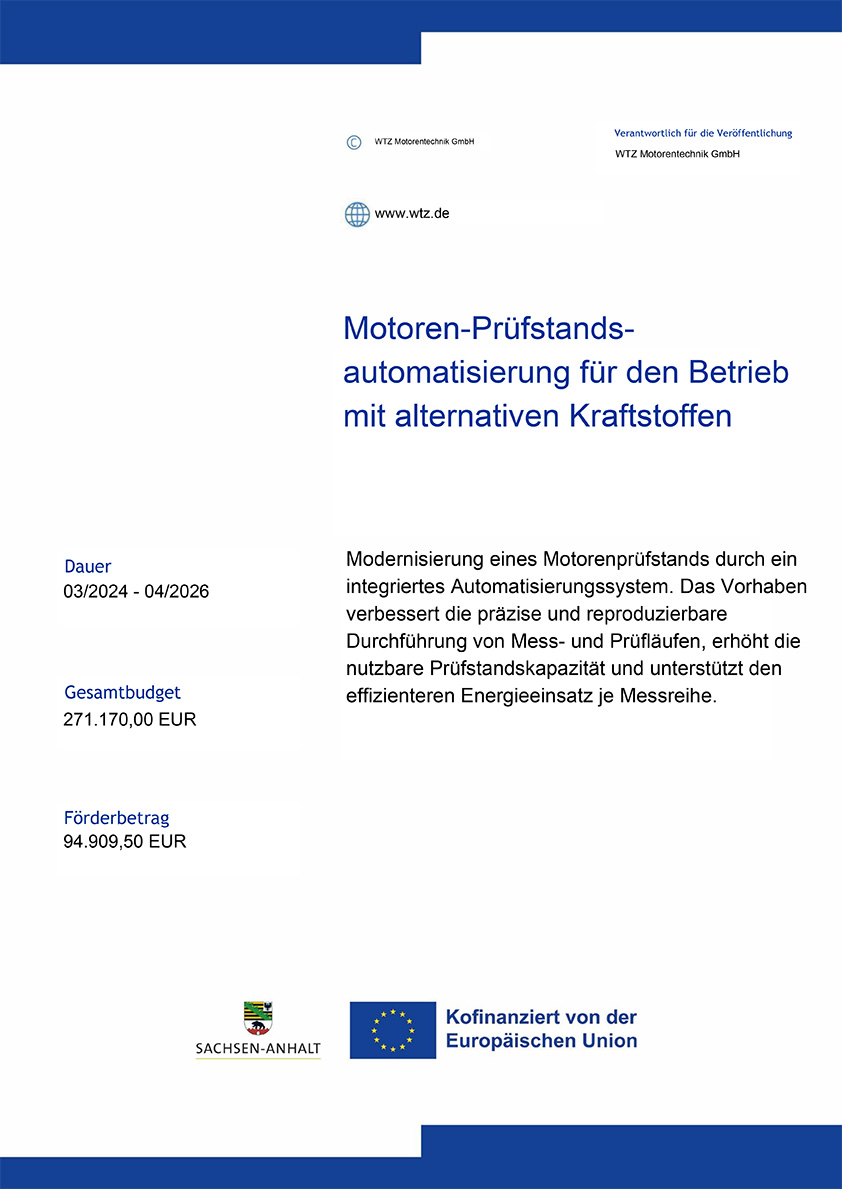
The project was funded by the State of Saxony-Anhalt as part of the Saxony-Anhalt SME Investment Support Program and co-financed by the European Union .